


Redazione Lovehorses
Writer & Blogger
Article by Dr Elisabetta Bacaro, DVM (Veterinarian)
Horse Shoeing: Care, Trimming and Corrective Horseshoes
Every horse’s hoof requires individual care and a specific trimming approach.
If a horse has a condition affecting one hoof — for example, the left front hoof — a specific corrective shoe may be used to address that particular problem.
There is no reason to apply the same correction to a healthy hoof.
If both front hooves are affected, for example by pain or low heels, the same corrective shoe may be used on both, combined with more precise hoof trimming.
👉 Horse shoeing is never a standard procedure: every hoof has its own specific needs. Find out how to care for your horse through correct trimming, targeted shoeing and effective prevention.

When Are Corrective Horseshoes Useful?
Corrective horseshoes are only useful when they are applied in a targeted and moderate way.
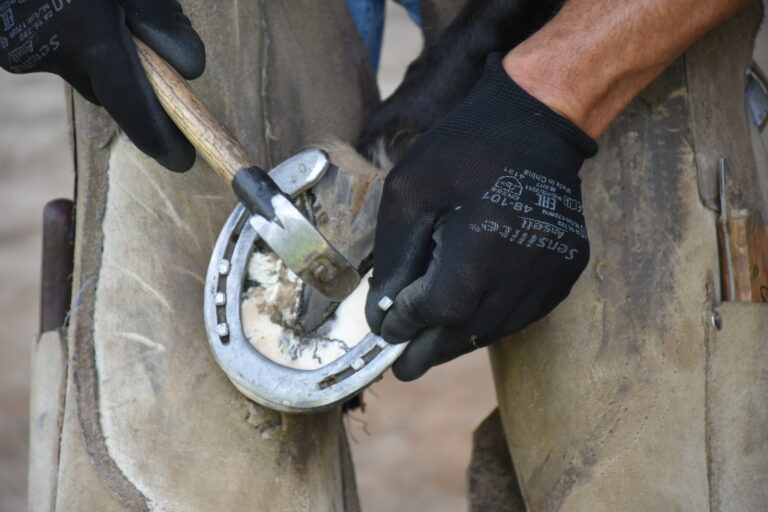
There Is No One-Size-Fits-All Solution
There are no universal horseshoes suitable for every hoof condition.
The Risk of an Incorrect Shape
Horseshoes with a wide toe and narrow heel can even be counterproductive in certain conditions.
A Targeted Approach
Corrective shoeing should support and improve the hoof, not create new problems. The work must be targeted, personalised and never excessive.
Common Mistakes to Avoid
Only constant attention, proper prevention and timely intervention can help preserve your horse’s hoof health over time.
When to Use Corrective Shoeing
Truly effective shoeing does not only involve assessing the hoof. It also takes into account the horse’s entire training programme and recovery periods
The Stages of the Rehabilitation Process
✔ Targeted treatment: addressing the underlying condition directly
✔ Postural rehabilitation: restoring muscle function and correct body alignment
✔ Gradual return to work: progressively resuming exercise
✔ Athletic preparation: optimising physical condition in preparation for competitions
✔ Regeneration and recovery: allowing adequate time for rest and recovery
Personalised Training and Horse Health
In addition to lameness examinations, pre-purchase examinations and preventive care, Dr Elisabetta Bacaro also provides personalised training programmes and physiotherapy equipment to promote the horse’s wellbeing — both for everyday management and in preparation for competitions.
Conclusion
Horse shoeing is a complex process that requires expertise and experience. Individual adjustments, timely corrective work and a clear training plan all play an important role in preserving the horse’s health and performance.
Discover more articles about equestrian sports and LoveHorses innovations — always with one goal: the well-being of the horse.
We hope you have found this information useful and interesting.
If you have any questions or concerns, please don’t hesitate to contact us.
Thank you for reading our blog, and see you next time!


